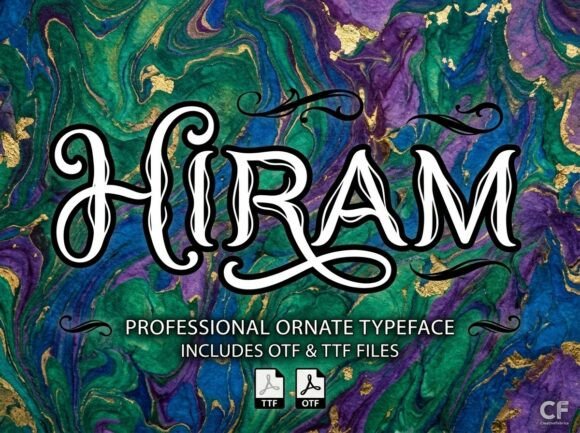
Hiram: A Display Typeface That Commands Attention
There are fonts that whisper, and then there are fonts that demand to be seen. Hiram belongs firmly in the second category. This isn't your everyday workhorse typeface for body text—it's a decorative display font built for moments when you need every letter to make a statement. Think bold headlines, striking logos, and creative packaging where visual impact matters more than subtlety.
If you've ever struggled to find a typeface that feels genuinely distinctive without crossing into illegibility, Hiram occupies that sweet spot. It carries strong artistic personality while maintaining the kind of polished finish that keeps your work looking professional rather than amateurish. For designers, entrepreneurs, and creative professionals who want typography that breaks from the expected, this font offers something worth exploring.
Where Hiram Fits in Your Design Toolkit
Every designer has a mental shelf of go-to typefaces—reliable sans serifs for clean layouts, elegant serifs for editorial work, maybe a script font for invitations. Hiram slots into a different role entirely. It's the font you reach for when a project calls for high-impact visual communication.
Consider a few scenarios where this kind of typeface genuinely earns its place:
- Logo design for brands that want to project confidence and creativity—think boutique agencies, artisan food companies, or independent fashion labels
- Packaging design where shelf presence matters and every product needs to stand out among competitors
- Social media graphics where you have roughly two seconds to stop someone scrolling past your content
- Poster and event promotion where large-scale typography needs to read clearly from a distance while still looking distinctive
- Website hero sections where a single bold statement sets the tone for an entire brand experience
- Editorial layouts needing dramatic chapter titles or pull quotes that anchor a reader's attention
- Merchandise and branded products like t-shirts, tote bags, and stickers where the typography essentially becomes the design
The all-caps format reinforces this high-impact purpose. When every letter is uppercase, the uniformity creates a strong visual rhythm across headlines and short phrases. This works particularly well for brand names, taglines, and single-word statements that need to land with authority.
Matching Typography to Project Goals
Choosing the right font isn't just about personal taste—it's about alignment with what you're trying to communicate. A playful handwritten font sends a different message than a structured geometric sans serif, and a decorative display typeface like Hiram communicates yet another set of qualities: boldness, creativity, and confidence.
Before selecting any typeface for a project, ask yourself a few practical questions:
- What's the primary medium? Hiram works beautifully at larger sizes on screens and in print, but it's not designed for long paragraphs of body copy. Pair it with a clean serif font or sans serif for supporting text.
- Who's the audience? Display fonts with strong artistic character tend to resonate with audiences who appreciate creativity and visual design—think lifestyle brands, creative industries, and consumer-facing businesses with personality.
- What mood are you establishing? The unique artistic elements in Hiram give it a contemporary edge that suits modern brand identities, especially those positioning themselves as innovative or design-forward.
- How will it pair with other fonts? Strong display fonts generally work best alongside simpler companions. A neutral sans serif or classic serif provides breathing room and ensures your hierarchy stays clear.
Improving Brand Recognition Through Distinctive Type
One of the most overlooked aspects of brand identity is typographic consistency. When a business uses the same typeface across its website, packaging, social media, and print materials, that font becomes part of how customers recognize and remember the brand. Think about how immediately you identify certain companies just from their letterforms.
A premium font like Hiram can serve as a cornerstone of that recognition strategy. Because its visual personality is so distinctive, using it consistently across touchpoints creates a cohesive brand experience. A customer who sees your packaging in a store should feel the same visual connection when they encounter your Instagram posts or website header.
This matters especially for small businesses and independent creators competing against larger brands with bigger budgets. Distinctive typography is one of the most cost-effective ways to establish a professional presence. You don't need a massive marketing spend when your visual identity does the heavy lifting.
Practical Tips for Working with Display Fonts
Working with a decorative display typeface requires a slightly different approach than setting body text. Here are some observations from real-world design projects:
Test at actual size. Fonts that look stunning in a design application at 120 pixels might behave differently when rendered at the size your audience will actually see. Always preview your work at the intended output dimensions—whether that's a mobile screen, a printed poster, or a product label.
Watch your spacing. All-caps display fonts often benefit from slightly increased letter-spacing (tracking) to improve readability, especially at smaller display sizes. Experiment with spacing to find the balance between impact and clarity.
Limit your use. Hiram's strength is its visual distinctiveness, but that same quality means it can overwhelm a layout if overused. Reserve it for headlines, logos, and key callouts rather than applying it to every text element on the page.
Consider color and contrast. Decorative fonts show their character best against clean backgrounds with strong contrast. Avoid placing them over busy images or textured backgrounds where the artistic details might get lost.
Review the included file formats. Having both OTF and TTF files ensures compatibility across different software and workflows. The OpenType format works well with professional design applications like Adobe Creative Suite, while the TrueType format provides broader compatibility for other tools and operating systems.
Commercial Use and Licensing Considerations
For anyone planning to use a font in commercial projects—whether that's client work, product packaging, merchandise, or marketing materials—understanding the licensing terms matters. Most premium fonts come with specific guidelines about how they can be used, and it's worth reviewing these details before finalizing any project.
The practical reality is that investing in a well-designed commercial font often saves time and headaches compared to relying solely on free alternatives. Quality commercial fonts typically offer better spacing, more refined letterforms, and broader character support. They also come with clearer licensing, which protects both you and your clients.
Hiram's value proposition centers on its role as a creative design asset rather than a utility font. It's the kind of typeface that can define a visual identity, elevate a marketing campaign, or transform a basic layout into something memorable. For designers and creators who understand that typography is one of the most powerful tools in visual communication, having a few distinctive display fonts in your collection isn't a luxury—it's a practical necessity.
Whether you're building a brand from scratch, refreshing an existing identity, or working on a one-off creative project, the fonts you choose say something about the work itself. Hiram says you're not afraid to be bold about it.