Cowboy Doodle: Capture the Frontier Spirit in Your Designs
There’s a certain nostalgia attached to the Wild West that’s instantly recognizable and deeply evocative. It’s not just about cowboys and horses; it’s a feeling of adventure, rugged individualism, and handcrafted authenticity. For designers and creators looking to tap into that powerful visual language without resorting to clichéd clipart, finding the right asset is key. Enter Cowboy Doodle, a charming dingbats font that serves as a creative time machine, allowing you to lasso that frontier spirit and bring it into your modern projects with style and personality.
A Visual Toolkit Steeped in Character
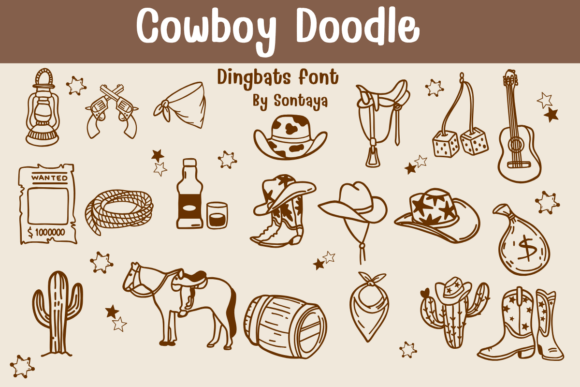
At its core, Cowboy Doodle is more than just a set of icons; it’s a carefully curated collection of hand-drawn illustrations that tell a story. Each character you type is rendered with a warm, monolinear stroke and an organic, slightly sketchy texture that mimics the feel of a personal sketchbook. This isn’t sterile, vector-perfect imagery. It has the subtle imperfections and human touch that give it soul. You’ll find the essential symbols of frontier life: iconic cowboy hats, weathered boots, sturdy lassos, and resilient cacti. But it goes deeper with classic western motifs like “Wanted” posters, sheriff stars, and other rustic details that provide rich context for storytelling.
This design style makes it incredibly versatile. The monolinear quality ensures the icons remain clean and legible even at smaller sizes, while the sketchy texture adds warmth and prevents them from feeling cold or corporate. It strikes a perfect balance, feeling both professional and playfully handcrafted. This unique character is what sets it apart from standard icon sets or overly simplistic dingbats. It’s a typeface that carries its own personality, ready to infuse your work with a sense of adventure and curated charm.
Practical Applications for the Modern Creator
So, where does a font like Cowboy Doodle actually fit into a designer’s or business owner’s workflow? The applications are surprisingly broad, stretching far beyond literal western-themed projects. Think of it as a tool for adding texture, narrative, and a specific mood to your visual communication.
Branding & Logo Design: For businesses with a rustic, artisanal, or adventurous brand identity, these icons are gold. A boutique brewery, a custom leather goods shop, a camping gear startup, or a farm-to-table restaurant could use a single icon as a secondary brand mark, on packaging, or as part of a pattern. It instantly communicates values of craftsmanship, durability, and authenticity.
Editorial & Packaging Design: Imagine a cookbook with chapter dividers featuring a tiny rolling pin or a cast-iron skillet icon from the set. Consider product packaging for a hot sauce or gourmet jerky that uses a subtle cactus or boot icon as a decorative element. In editorial layouts for magazines or blogs, these icons can break up text, highlight key sections, or illustrate a story about travel, outdoor lifestyle, or heritage brands.
Digital Presence & Marketing: Social media is a prime playground. Use the icons to create engaging Instagram story templates, highlight cover images, or as decorative bullets in a Facebook ad. They can add visual interest to blog post headers, website footers, or email newsletter graphics. For digital products like e-books or online courses focused on topics like homesteading, DIY crafts, or even motivational themes of “pioneering your own path,” the icons serve as perfect thematic punctuation.
Events & Merchandise: Planning a themed wedding, a corporate team-building event with a rustic flair, or a community festival? Cowboy Doodle is ideal for invitations, programs, signage, and thank-you cards. For merchandise like t-shirts, tote bags, or stickers, a well-placed icon can become the entire design, offering a cool, understated graphic that resonates with a specific audience.
Integrating Icons into a Cohesive Visual System
Using a dingbats font effectively requires more than just picking a pretty picture. It’s about integrating it thoughtfully into your broader design system to enhance, not distract from, your message.
Pairing with Typography: The key is contrast and balance. Since Cowboy Doodle has a distinct, illustrative style, pair it with clean, simple typefaces. A sturdy sans serif font for body text or a classic serif font for headlines will ground the design and ensure readability. Avoid pairing it with other highly decorative or script fonts that might compete for attention. Let the icons be the accent, the supporting actor that makes the star (your message) shine brighter.
Color and Context: The monolinear design works beautifully in single color. Think classic black or brown for a vintage feel, or a single brand color to tie it into your palette. You can also use it as a stamp or watermark effect with reduced opacity for a subtle texture. Always consider the context. A sheriff star icon might be perfect for a “Featured” section on a website but could be misread in a different cultural context. Test how the icon reads within the layout to ensure it supports the intended meaning.
Licensing for Commercial Use: This is a critical, practical consideration. If you’re using Cowboy Doodle for client work, merchandise, or any project that generates revenue, you must ensure you have the correct commercial font license. Always review the license agreement provided by the font creator. Reputable designers and foundries offer clear licensing terms, often with options for desktop, web, and digital product use. This isn’t just about legal compliance; it’s about respecting the work of fellow creatives and supporting the ecosystem that allows us to find such unique design assets.
Finding Your Unique Western Angle
The true power of a resource like Cowboy Doodle lies in its ability to help you find a unique angle. You don’t have to be designing for a literal ranch. A financial advisor could use the horse icon subtly to symbolize “steady growth” or “long-term investment.” A tech startup focused on rugged, outdoor adventure gear could use the cactus icon to denote resilience. A life coach might use the lasso icon to represent “taking control of your goals.”
It’s about using the visual metaphor to add a layer of depth and personality to your brand identity. In a crowded digital landscape, these small, thoughtful details are what make a design feel intentional and curated. They transform a generic layout into one with a story, inviting your audience to connect on a more emotional level.
Ultimately, Cowboy Doodle is a testament to the enduring appeal of handcrafted artistry in our digital world. It’s a premium font that offers a specific mood and a versatile toolkit. By approaching it with a strategist’s eye and a designer’s touch, you can harness its frontier spirit to create work that feels adventurous, authentic, and unmistakably your own. So saddle up, explore the characters, and see where this creative journey takes your next project.